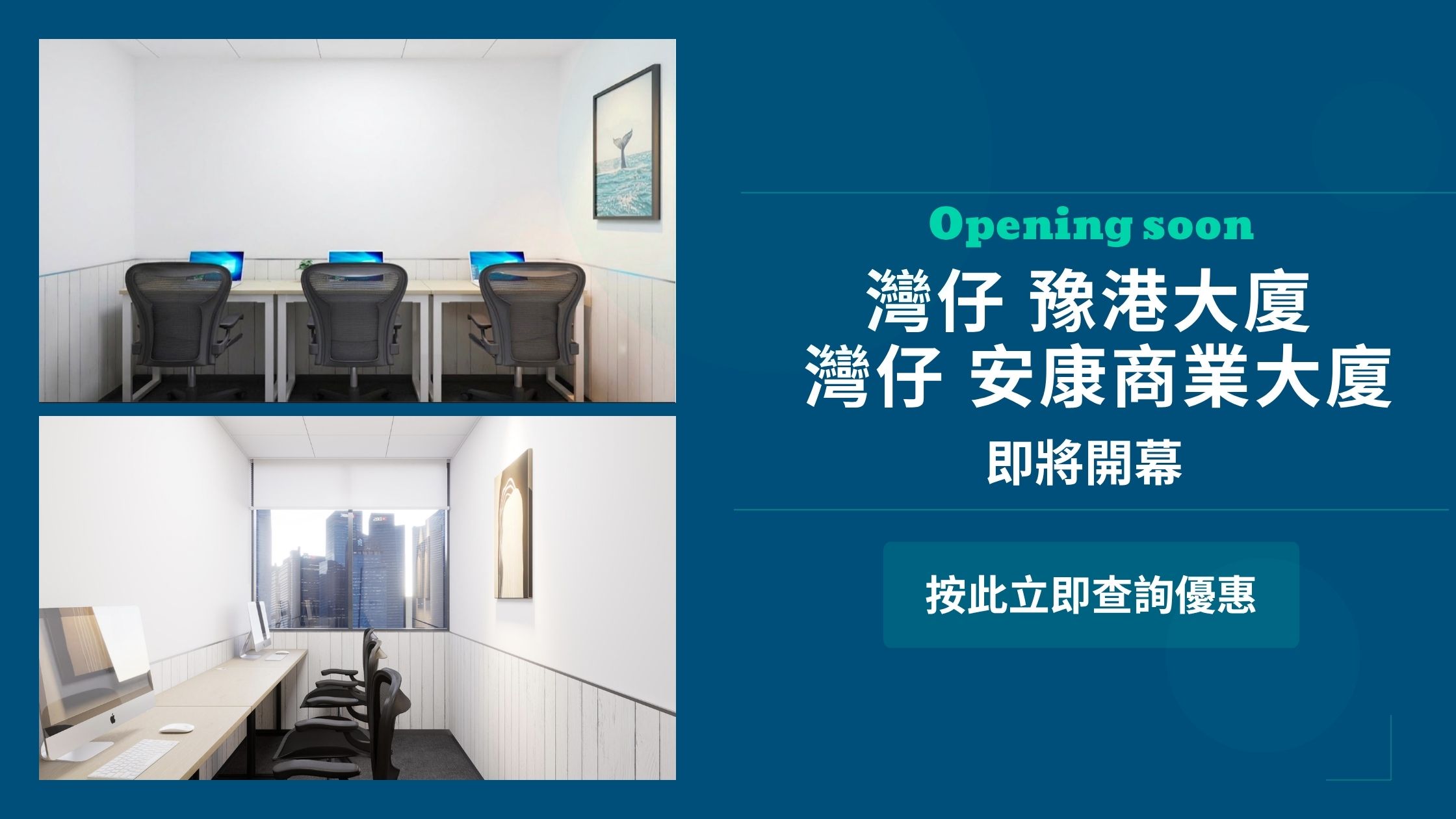


Published: 30 July 2026丨Author: Capital Business Centre Editorial Team丨Estimated reading time: 7 minutes 丨Suitable for: Startup founders, administrative executives (Office Admin / HR), heads of foreign company Hong Kong branches, SME decision-makers, etc.
TL;DR 3-Minute Quick Summary
Many entrepreneurs and administrative executives looking for office space in Hong Kong fall into a critical blind spot—over-focusing on the “rent per square foot” quoted by estate agents.
In reality, when renting an office in Hong Kong, the rent per sq ft is only the tip of the iceberg. Once you actually sign the lease, the hidden costs beneath the surface start to emerge one by one:
These seemingly minor hidden details often silently erode a company’s precious cash flow. This article examines the pros and cons of serviced offices versus traditional office leasing from three dimensions—operating costs (CapEx/OpEx), time conversion and operational flexibility—to help you make the smartest business decision.
When comparing prices, many decision-makers often put the “net rent” of a traditional office directly against the monthly fee of a serviced office and conclude that “serviced offices are more expensive.” This calculation, however, ignores the substantial additional costs behind traditional leases.
Renting a traditional office in Hong Kong requires a surprisingly large amount of capital upfront. Landlords typically demand a deposit of 3 to 6 months’ rent (depending on the company’s financial background), plus 0.5 month’s agency commission, legal fees, stamp duty, and renovation and furniture costs that can easily run into hundreds of thousands of Hong Kong dollars. This means that before the business even starts generating revenue, the company must lock a six- or even seven-figure sum with the landlord and contractors.
By contrast, because the infrastructure of a serviced office is already in place, companies usually only need to pay 1 to 2 months’ deposit to move in, and upfront capital expenditure (CapEx) approaches zero. For start-ups, SMEs or foreign company branches in Hong Kong that need to preserve working capital for business expansion, this substantially reduces financial pressure.
In addition to the monthly net rent, traditional office tenants must also handle and pay for: government rates, building management fees, commercial-grade broadband, utilities, office cleaning, and maintenance of air-conditioning and office equipment. Managing these miscellaneous matters often requires additional time from administrative staff (Office Admin).
Business centres adopt an “all-inclusive” model. The monthly fee already covers management fees, rates, utilities, high-speed internet and daily cleaning. The finance team only needs to process one clear invoice each month, with no manpower wasted on reconciliation and payments.
To give you a more intuitive sense of the huge difference, we have prepared the following office leasing cost comparison table based on a 10-person team operating in Hong Kong’s core business district (CBD):
|
Cost Item |
Traditional Office (approx. 800 sq ft bare shell) |
Serviced Office (10-person dedicated office) |
|
Fit-out / furniture upfront investment |
HK$150,000 – HK$300,000 (non-recoverable) |
HK$0 (fully furnished with branded office furniture) |
|
Upfront deposit |
3 to 6 months’ rent (approx. HK$90,000 – HK$180,000) |
1 to 2 months’ deposit (approx. HK$30,000 – HK$60,000) |
|
Utilities & commercial-grade broadband |
Must apply yourself; approx. HK$2,500 – HK$4,000 per month |
HK$0 (all-inclusive) |
|
Reception & security / cleaning |
Must hire or outsource yourself; approx. HK$18,000+ per month |
HK$0 (handled by the centre’s professional secretariat) |
|
Hidden administrative management costs |
Consumes large amounts of management time; countless miscellaneous invoices to process |
Zero administrative burden; one invoice per month for easy reconciliation |
|
Lease term flexibility |
Typically 2 to 3 years’ “lock-in” (no early termination right) |
Flexible terms as short as 1 to 3 months; renewable monthly |
Based on our years of experience helping companies relocate, the details around “fit-out” and “exit” are the areas that most administrative executives later regret.
From space design and fire-safety approval to construction commencement, a traditional office typically takes 1.5 to 3 months. Although landlords usually grant a 1- to 2-month “rent-free period,” note that during this period you still have to pay the expensive building management fees and rates on schedule. More importantly, the team cannot move in and operate during this time, creating a hidden opportunity cost of time.
The vast majority of traditional office leases in Hong Kong contain strict clauses: on exit, the tenant must, at their own expense, reinstate the office space to the “bare-shell” condition at handover.
This means that the glass partitions, meeting rooms, flooring and feature walls that cost hundreds of thousands of Hong Kong dollars to build must be completely dismantled at further cost when the lease ends.
Serviced office solution: The space and facilities are ready-made. At the end of the contract, the tenant simply takes away personal computers and core documents and returns the keys—no reinstatement costs or construction risk whatsoever.
In the current economic environment, a company’s agility directly affects its risk resilience:
A: Yes. On a comprehensive calculation, serviced offices usually save 20% to 40% in total expenditure. Although the net rent per square foot of a traditional office appears lower, once you factor in fit-out costs, deposit lock-up, management fees, utilities and reinstatement works, the “all-inclusive” model of a serviced office typically has a lower total cost.
A: Yes. Quality business centres all provide legitimate business registration and company secretary address services. Companies can directly use Grade-A office addresses in core CBD districts such as Central, Causeway Bay, Wan Chai or Tsim Sha Tsui as their official registered address, significantly enhancing brand image and client trust.
A: Absolutely. Serviced offices provide independent lockable private offices (not open shared desks). On the network side, independent VLAN settings and dedicated IPs can also be provided to ensure secure and independent data transmission for the company.
A: Traditional rent-free periods are mainly for fit-out and still require payment of management fees; serviced offices are ready to use immediately upon leasing. The rent-free period of a traditional office cannot be used for actual business operations, whereas a serviced office—already fully fitted and furnished—allows you to move in with your computers and start working right after signing the contract.
As a leading corporate space solutions specialist in Hong Kong, Capital Business Centre provides high-quality serviced offices and virtual office services in Hong Kong’s core business districts (including Grade-A buildings in Central, Wan Chai, Causeway Bay and Tsim Sha Tsui).
We offer flexible lease terms, high-specification network infrastructure and professional front-desk secretary support, helping you present a highly competitive corporate image at the most streamlined cost.
Looking for a flexible office solution in a prime location for your team?
[Contact Capital Business Centre property consultants now] to arrange a site visit and unlock maximum cash-flow flexibility for your business!